


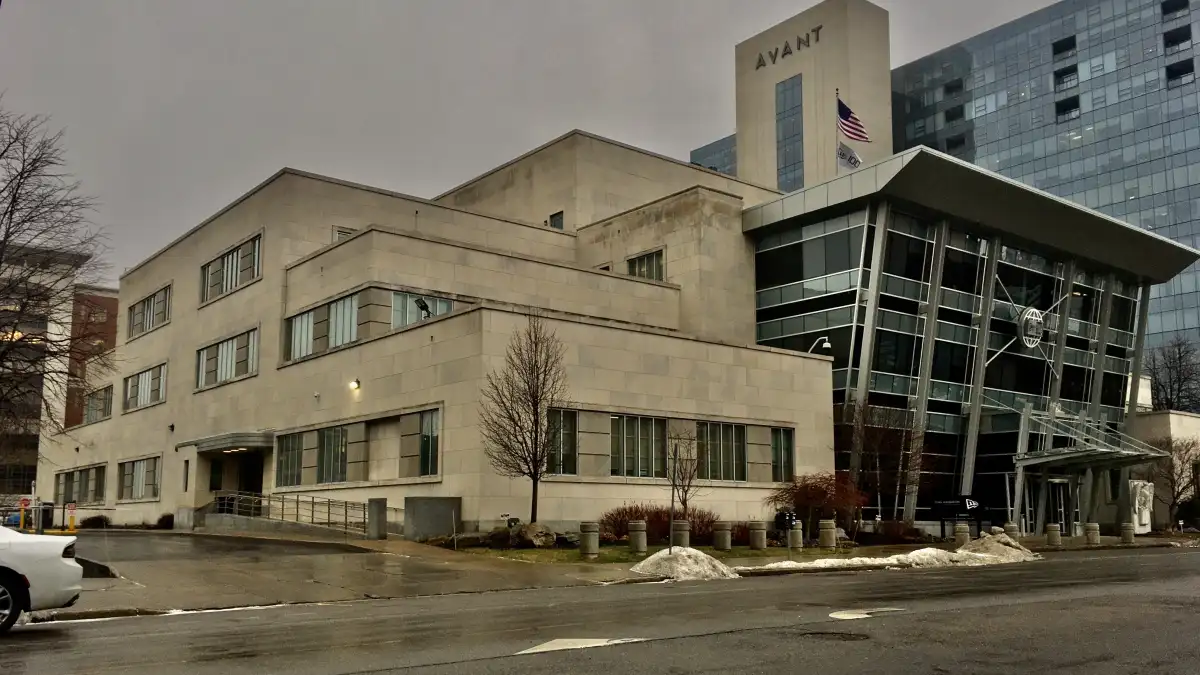
Photo: Andre Carrotflower / Wikimedia Commons, CC BY-SA 4.0, cropped
How do interest rates and central banks work in the US, and how does the Fed affect your money?
By FastBuySale Newsroom · · 20m ago
Get breaking news & deals on your favourite app
Interest rates and central banks in the US explained for beginners: the Federal Reserve's dual mandate, the 2% inflation goal, the FOMC and the federal funds rate (3.75%-4.00% after the October 28, 2026 meeting), open ma. The Fed's dual mandate: maximum employment and stable prices.
📌 Key points
- The Fed's dual mandate: maximum employment and stable prices.
- Inflation goal: 2% over the longer run, measured by PCE.
- The FOMC sets a target range for the federal funds rate.
- Range: 3.75%-4.00% after the October 28, 2026 meeting (held, 10-2 vote).
- Last change: +25 basis points effective September 17, 2026.
- Next scheduled FOMC meeting: December 8-9, 2026.
Key terms: the Fed, the FOMC and the federal funds rate
Interest rates and central banks in the US work through the Federal Reserve, the nation's central bank. Congress has assigned the Fed to conduct monetary policy to support two goals, maximum employment and stable prices, often called the dual mandate. The Fed's main lever is the federal funds rate, a short-term rate that influences what banks charge and pay across the economy.
Decisions are made by the Federal Open Market Committee (FOMC). On October 28, 2026, the FOMC voted 10 to 2 to keep the target range for the federal funds rate at 3-3/4 to 4 percent, noting that inflation remains elevated. The two dissenters preferred a quarter-point increase.
Federal Reserve (the Fed): the US central bank. Its monetary policy aims at maximum employment and stable prices.
Maximum employment: the Fed defines it as the highest level of employment, or lowest level of unemployment, that the economy can sustain in a context of price stability.
Stable prices: prices are considered stable when consumers and businesses do not have to worry about costs significantly rising or falling when making plans or borrowing and lending for long periods.
2% inflation goal: the FOMC judges that inflation of 2 percent over the longer run, measured by the annual change in the price index for personal consumption expenditures (PCE), is most consistent with price stability. The Fed says that when households and businesses can reasonably expect 2% inflation, they are better able to make sound decisions about saving, borrowing and investment.
FOMC: the Federal Open Market Committee, which sets the short-term objective for the Fed's operations. In 2026 it scheduled eight meetings: January 27-28, March 17-18, April 28-29, June 16-17, July 28-29, September 15-16, October 27-28 and December 8-9.
Federal funds rate: the interest rate at which depository institutions lend reserve balances to other depository institutions overnight. The FOMC sets a target range for it, for example 3.75% to 4.00%.
Basis point: one hundredth of a percentage point. A 25 basis point move equals 0.25 percentage points.
Readers evaluating Federal Reserve should separate marketing claims from the actual rule text that governs their account or product. When two summaries disagree, the governing document or statute wins. If a rule depends on your age, filing status, or income band, re-check it when any of those facts change. Life events quietly move people across thresholds they last reviewed years earlier.
Educational explainers like this one cannot replace personalized advice for complex situations such as divorce orders, inherited accounts, or cross-border tax residency. Escalate those cases to a qualified professional. When in doubt about a number that changes every year, describe your plan qualitatively first, then look up the current official figure for the tax year you care about before you act.
How the Fed steers interest rates
Open market operations (OMOs), the purchase and sale of securities in the open market by a central bank, are a key tool the Fed uses to implement monetary policy.
Before the global financial crisis, the Fed used OMOs to adjust the supply of reserve balances so the federal funds rate stayed near the FOMC's target. Its approach has evolved considerably since late 2008, when the FOMC set a near-zero target range.
From the end of 2008 through October 2014, the Fed greatly expanded its holdings of longer-term securities to put downward pressure on longer-term interest rates and support economic activity and job creation.
Today the Fed operates with ample reserves. The October 2026 statement says the Committee is continuing its policy of maintaining ample reserves in the banking system. Tools such as overnight reverse repurchase agreements (ON RRPs) and, since 2021, standing repo operations help keep the federal funds rate within the target range; the Fed says standing repo operations help provide a ceiling on rates.
In simple terms: the FOMC sets the target range, and the Fed uses these tools to keep the federal funds rate inside it. The rates on your own accounts and loans are set by your bank or lender under your product terms, so check those terms directly.
A useful habit is to write down your goal, time horizon, and cash buffer before you change any election related to Federal Reserve. Decisions made during a stressful week are the ones people reverse later at a cost. Educational explainers like this one cannot replace personalized advice for complex situations such as divorce orders, inherited accounts, or cross-border tax residency. Escalate those cases to a qualified professional.
The recent US rate path
The Federal Reserve Board publishes the history of FOMC target changes. Recent moves:
2022: rapid increases, including 75 basis point rises in July, September and November and 50 basis points in December, taking the range to 4.25%-4.50%.
2023: four 25 basis point increases, ending at 5.25%-5.50% in July 2023.
2024: cuts of 50 basis points in September and 25 basis points in November and December, ending at 4.25%-4.50%.
2025: 25 basis point cuts in September, October and December, ending at 3.50%-3.75%.
2026: a 25 basis point increase effective September 17, 2026, to 3.75%-4.00%. On October 28, 2026 the FOMC held the range at 3.75%-4.00%. The statement said economic activity is expanding at a strong pace, job gains have kept pace with the workforce, the unemployment rate has changed little, and inflation remains elevated.
The next scheduled meeting is December 8-9, 2026, which is associated with a Summary of Economic Projections. Rates can move in either direction; no future move is guaranteed.
Keep digital and paper copies of confirmations after every change. Screenshots of election pages, email receipts, and year-end statements make tax season and job changes far less chaotic. Compare fees the same way you would compare two similar listings before you buy: look at what you pay each year, what you get, and whether a simpler option meets the same need.
What Fed rate decisions mean for your money
Savings: your bank sets the rate on your savings account or certificate of deposit, so check its current rate and terms rather than assuming it tracks the Fed. See how a rate changes long-term growth with the and compare it with inflation using the Our guide to covers where to keep cash.
Credit cards: check your cardholder agreement for your APR and how it can change. Model how long a balance takes to clear at your rate with the
Mortgages: adjustable-rate loans can reset with market rates, while fixed-rate loans lock your rate. Test payments at different rates with the and read
Personal and auto loans: new loans are priced off market rates. Compare offers with the and see
Illustration only: on a $10,000 balance, each 0.25 percentage point rise in a variable rate adds about $25 a year in interest. Small moves add up across several debts, so review every variable-rate balance you hold after each FOMC decision and prioritise paying down the most expensive one first.
Found this Federal Reserve explainer useful? Share it with a friend, tell us what we missed in the comments, and get the FastBuySale app on Google Play () for more guides. Have something to sell? Post a free listing at in a couple of minutes.
If a rule depends on your age, filing status, or income band, re-check it when any of those facts change. Life events quietly move people across thresholds they last reviewed years earlier. Automation helps. Calendar reminders for annual reviews, automatic transfers, and beneficiary checkups reduce the chance that a good plan dies from neglect.
💬 Join the discussion on this article →
More in Finance · Trending News · Browse local deals
💡 What's in it for buyers
- Check whether your loans and cards are fixed or variable.
- Compare savings rates across banks.
- Pay down variable-rate debt first.
- Follow FOMC meeting dates.
FAQs
What is the current federal funds rate?
After the October 28, 2026 FOMC meeting, the target range is 3.75% to 4.00%.
Who sets interest rates in the US?
The Federal Open Market Committee sets the target range for the federal funds rate; banks set their own consumer rates.
What is the Fed's dual mandate?
Congress assigned the Fed to pursue maximum employment and stable prices.
Why does the Fed target 2% inflation?
The FOMC judges 2% inflation over the longer run, measured by PCE, is most consistent with price stability.
How often does the FOMC meet?
Eight scheduled meetings a year; in 2026 the last is December 8-9.
Does a Fed rate change affect my mortgage?
Fixed-rate mortgages keep their rate; adjustable-rate mortgages and new loans can be affected by market rate changes.
 $200
 $300
 $3
 $200