


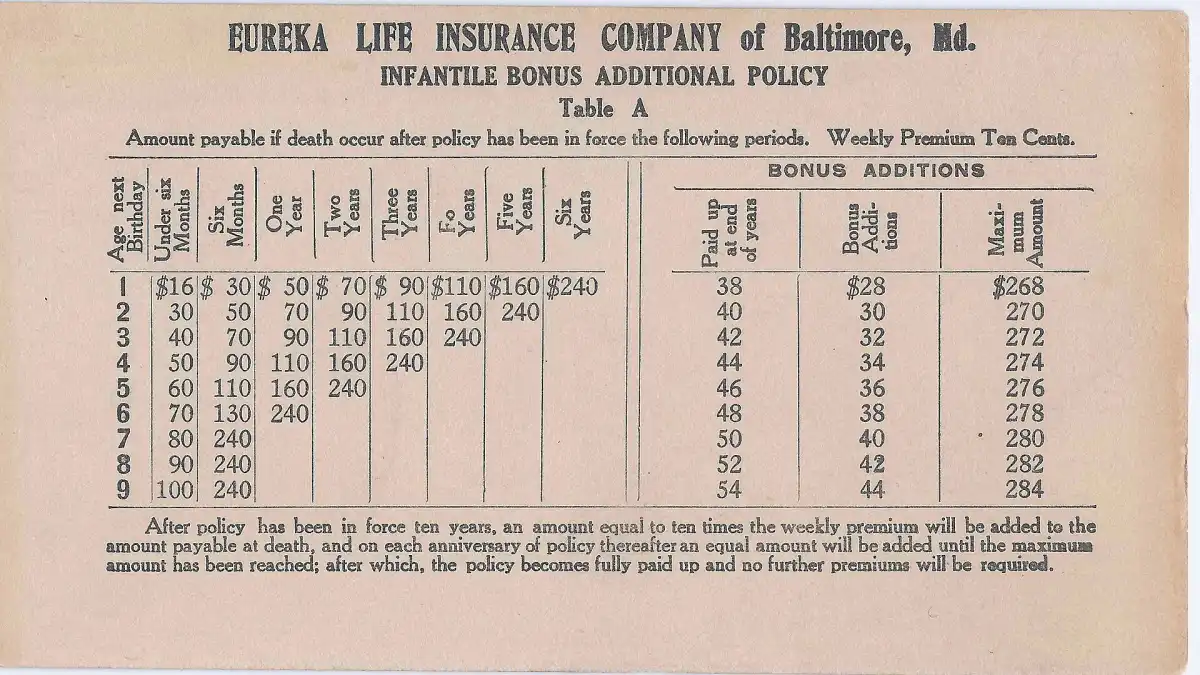
Photo: Eureka Life Insurance Company Inc / Wikimedia Commons, Public domain, cropped
What should first-timers know about life insurance in the US?
By FastBuySale Newsroom · · 18m ago
Get breaking news & deals on your favourite app
Life insurance in the US pays a death benefit to the people you name if you die while the policy is in force. Here is a first-timer's FAQ on term vs. whole life, free-look periods, the two-year contestable period, grace.
📌 Key points
- Term life covers a set period, from one year to 30 years or longer (TDI).
- Term premiums stay level for the term and rise on renewal (TDI).
- Texas free look: at least 10 to 20 days; New York: 10 to 30 days (TDI, NY DFS).
- Most policies have a 31-day grace period (TDI).
- Policies have a two-year contestable period (TDI).
- Licensed insurers belong to a guaranty association (TDI).
Term vs. whole life: which type is which?
Life insurance in the US is a contract: you pay premiums, and if you die while the policy is in force, the insurer pays a lump sum, called a death benefit, to the beneficiaries you named. The short answer for first-timers is that there are two broad families of policies. Term life covers you for a set period and is intended to provide lower-cost coverage, while cash value (permanent) policies such as whole life and universal life can last your whole life and build a cash value you may be able to use later.
According to the Texas Department of Insurance (TDI), a term can be one year or anywhere from five to 30 years or longer, and term premiums stay the same for the entire term but go up if you renew. The National Association of Insurance Commissioners' Life Insurance Buyer's Guide adds that most term policies don't build up cash values, and that if you want coverage for a longer period, such as your lifetime, cash value insurance may be more cost effective.
Term life insurance offers protection for a set period of time. TDI explains that term policies pay a lump sum to your beneficiaries if you die during the policy's term, and the policy ends at the end of the term unless you pay to extend it. Term policies aren't meant to provide coverage for your entire life; most people who buy them want coverage for a period of time, such as while they're raising a family or have children in college.
Because the premium on renewal is based on your age when you renew, not when you first bought the policy, renewal premiums are higher. TDI suggests that to help avoid higher premiums later, you consider buying a policy with a longer term. The NAIC buyer's guide notes that most term coverage can be renewed at the end of the term even if your health has changed, but a nonrenewable term policy can't be continued, and you'd have to apply for a new policy.
New York's Department of Financial Services (DFS) adds some useful vocabulary. Term coverage can be level, providing the same benefit until the policy expires, or decreasing during the term while premiums stay the same. Term plans may be convertible to a permanent plan of insurance. If you live beyond the term you selected, no benefit is payable, and as a rule term policies offer a death benefit with no savings element or cash value.
Whole life insurance, by contrast, stays in effect for your entire life unless you cash the policy in or stop paying premiums, according to TDI. DFS explains that to keep the premium level, the premium at younger ages exceeds the actual cost of protection, and this extra premium builds a reserve, the cash value, which helps pay for the policy in later years.
The NAIC guide describes the other cash value types. Whole life and universal life differ mainly in how you pay: whole life premiums are typically paid on a set schedule, while universal life lets you choose a flexible premium pattern as long as you pay enough to keep the policy in force. In variable life, the investments you choose, such as stock and bond funds, directly affect your cash value, giving the greatest potential to build cash value but also the greatest risk of losing it.
Free look, grace periods and the contestable period
The free-look period is your safety net after buying. TDI says Texas policies have a free-look period of at least 10 to 20 days, during which you may cancel the policy for any reason and get a full refund, and it urges buyers to use this time to be sure the coverage is right. New York DFS says the state requires a minimum free look of 10 days and a maximum of 30 days, and a 30-day free look is required for any policy offered through the mail.
If you miss a payment, the grace period matters. TDI explains that most policies have a 31-day grace period after the premium's due date. You may pay during the grace period with no interest charged and still have coverage, and if you die during this period, your beneficiary still gets the death benefit. DFS describes an automatic premium loan provision on some cash value policies: at the end of the grace period, if the premium is unpaid, a policy loan is automatically made from the cash value to pay it, which helps prevent an unintentional lapse.
The contestable period is the one most first-timers have never heard of. According to TDI, life insurance policies have a two-year contestable period. If you die within this period, the company may review the information you gave on your application, and it might take longer to pay. If a company denies payment, it must return the premiums to your beneficiary. TDI also notes you'll have a new contestable period if your policy lapses and you later reinstate it.
TDI also explains that during the first two years of a policy, companies usually won't pay the death benefit if the cause of death is suicide; if the company doesn't pay, it must return the premiums to the beneficiary. Once the policy has been in effect for more than two years, the company must pay the death benefit regardless of the cause of death. The practical lesson is simple: answer every application question honestly and completely.
How to shop for a policy safely
TDI's shopping checklist is a good model for any state. First, make sure the agent and company are licensed to sell insurance. If you buy from an unlicensed company, your beneficiary might not get paid if the company fails. Licensed companies belong to a guaranty association that pays claims for failed companies. Your state insurance department can confirm a license.
Second, check a company's financial rating and complaint history, get quotes from several companies because rates vary, and compare apples to apples. TDI warns that a less expensive policy could have fewer features or a lower death benefit, while a more expensive policy might be better value when you consider the death benefit per premium dollar, so don't choose on price alone.
Third, know how much coverage you're buying and what it will cost. TDI suggests thinking about how much your dependents would need after your death, and it says your company should tell you exactly how much your policy will cost. It also suggests shopping for a low- or no-load policy, since low commissions and fees can save money.
Finally, be careful with projections. TDI says agents often use charts to show how a policy's cash value might grow, but these are usually projections, not promises, and you could earn less. Ask for a history of the actual growth of cash values. Agents also can't legally offer you a gift or a discount on an investment or loan to encourage you to buy life insurance. To sense-check premiums against your budget, try our and use the to see how a fixed death benefit's buying power may shrink over decades.
Key terms to know
Death benefit: the lump sum paid to your beneficiaries when the insured person dies while the policy is in force. Beneficiary: the person or organization you name to receive it. Premium: the amount you pay to keep coverage. Face amount: the amount of the death benefit stated in the policy.
Term: the set period a term policy covers. Renewable term: coverage you can continue at the end of the term, usually at a higher premium. Convertible term: a term plan that may be converted to a permanent plan. Level and decreasing term: coverage that stays the same or shrinks during the term.
Cash value: the savings-like reserve built inside a permanent policy. Load: the commissions and fees built into a policy. Free look: the window after delivery to cancel for a full refund. Grace period: the time after a missed premium when coverage continues. Contestable period: the first two years, during which the insurer may review your application after a death. Guaranty association: the state safety net that pays claims if a licensed insurer fails.
Practical next steps for first-time buyers
Start with your reason for buying. TDI notes that most people who buy term policies want coverage while they're raising a family or have children in college, so list the debts, income and goals your coverage should protect. Then decide whether you need coverage for a period of time or for life, which points you toward term or cash value insurance.
Next, get several quotes for the same coverage amount and term, confirm each company and agent is licensed with your state insurance department, and read the policy carefully when it arrives. New York DFS advises asking the agent or company to explain anything you don't understand and reviewing your life insurance every few years as your family and financial circumstances change.
Keep the policy, the application and your beneficiary designations somewhere your family can find them, and pay premiums on time so you never rely on the grace period. If you're also weighing how much to set aside for savings, our shows how regular contributions can grow. Remember: this guide is general information based on state regulators' consumer pages, not personal advice.
Found this Life insurance in the US explainer useful? Share it with a friend, tell us what we missed in the comments, and get the FastBuySale app on Google Play () for more guides. Have something to sell? Post a free listing at in a couple of minutes.
💬 Join the discussion on this article →
More in Finance · Trending News · Browse local deals
💡 What's in it for buyers
- Confirm the agent and company are licensed.
- Compare several quotes for equal coverage.
- Use the free-look period to review the policy.
- Answer every application question honestly.
- General information only, not insurance advice.
FAQs
How long can a term life policy last?
TDI says a term can be one year or anywhere from five to 30 years or longer; you choose the length.
Can I cancel a new life insurance policy?
Yes, during the free-look period: at least 10 to 20 days in Texas and 10 to 30 days in New York, with a full refund.
What happens if I miss a premium?
Most policies have a 31-day grace period in which you can pay with no interest and keep coverage, according to TDI.
What is the contestable period?
A two-year window in which the insurer may review your application information if you die, which can delay payment.
Does term life insurance build cash value?
As a rule, no. NY DFS says term policies offer a death benefit with no savings element or cash value.
What if my insurer goes out of business?
TDI says licensed companies belong to a guaranty association that pays claims for failed companies.
 $200
 $300
 $3
 $200