


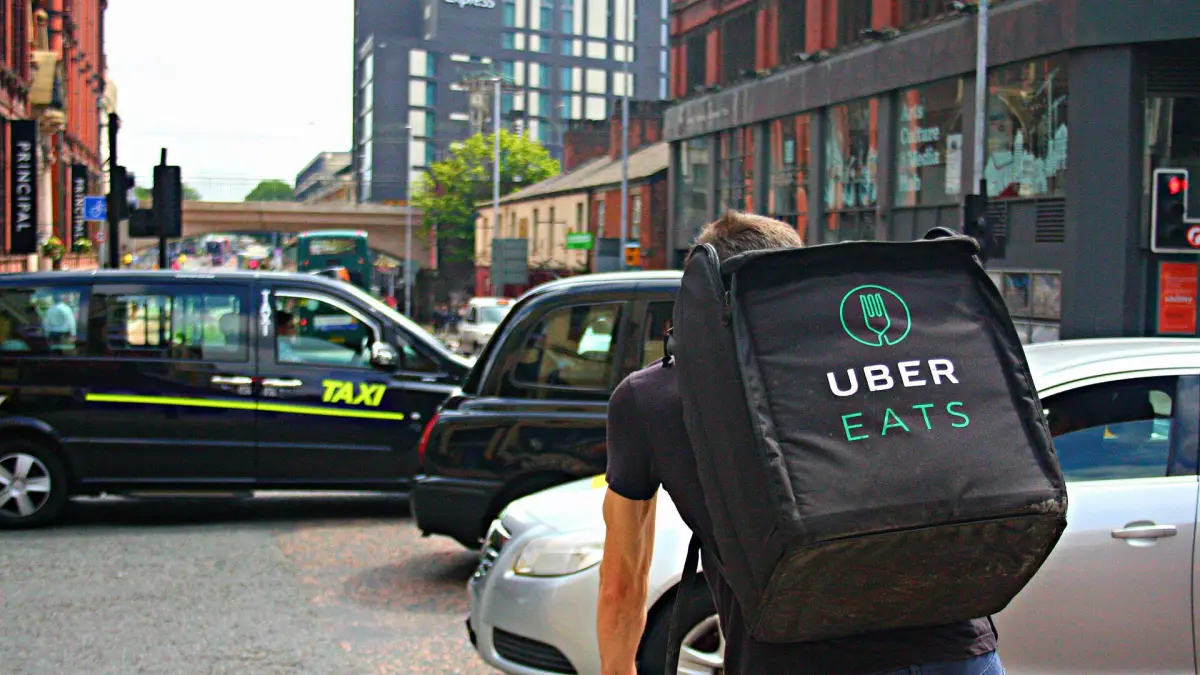
Photo: shopblocks / Wikimedia Commons, CC BY 2.0, cropped
Is Uber Eats worth it? Pros, cons and who it suits
By FastBuySale Newsroom · · 10m ago
Get breaking news & deals on your favourite app
Is Uber Eats worth it for delivery people? A neutral look at pros and cons: flexible hours, low barriers to entry and tips versus variable pay, vehicle costs, wear and tear, safety, insurance gaps and independent contrac. Uber Eats offers flexible, on-demand delivery work with low barriers to entry where the service operates.
📌 Key points
- Uber Eats offers flexible, on-demand delivery work with low barriers to entry where the service operates.
- Earnings vary by city, time of day, demand, distance, promotions and tips, so hourly income is not guaranteed.
- Delivery people are usually independent contractors who pay for fuel, maintenance, phone data and often extra insurance.
- Net earnings after vehicle costs can be much lower than gross earnings, so tracking expenses is essential.
- It suits people who need flexible extra income and live in busy areas, less so those needing stable, predictable pay.
What Uber Eats delivery work involves
Uber Eats connects restaurants, shops and customers with independent delivery people who pick up orders and drop them off, usually within a short distance. After signing up and passing checks, you open the app when you want to work, receive delivery offers showing estimated pay and distance, and accept or decline them. You then travel to the restaurant or store, collect the order, deliver it to the customer and move on to the next offer. Depending on your city, you might deliver by car, scooter, motorbike, bicycle or on foot. The appeal is obvious: no fixed schedule, no boss setting shifts and the ability to earn when it suits you. The question of whether it is worth it, however, depends on local demand, your vehicle costs and how you value flexibility against predictability.
Pro: flexible hours
You decide when and how long to work, which suits students, parents, people between jobs and anyone with irregular availability. You can work around a main job, deliver only during busy meal times or take time off without asking permission. For many people, this flexibility is the main reason to choose delivery work over traditional part-time jobs.
Pro: low barriers to entry
Compared with many jobs, getting started can be quick once checks are complete. You do not need formal qualifications or interviews, and bicycle or on-foot delivery in dense cities means you may not need a car at all. This makes Uber Eats accessible for people who need income quickly.
Pro: tips and promotions
Customers can tip, and in many places delivery people keep all tips. Promotions such as surge-style boosts during busy periods or quest bonuses for completing a set number of trips can raise earnings when available. Good service, fast delivery and clear communication can encourage tips.
Con: variable and uncertain pay
Earnings change with demand, weather, the number of other couriers online, time of day and app pay rules, which Uber can adjust. Quiet periods mean waiting without pay. Some offers pay little for the distance involved, and you must judge which to accept. Weekly income can vary widely, which makes budgeting difficult.
Con: vehicle and running costs
If you use a car or motorbike, fuel, maintenance, tyres, depreciation, parking and phone data come out of your earnings. These costs can take a large share of gross pay, especially on long trips or in heavy traffic. Bicycle and e-bike couriers have lower costs but face physical demands and weather exposure.
Con: contractor status and benefits
Delivery people are often classified as independent contractors, which typically means no paid holidays, sick pay or employer pension contributions in many countries, though rules differ and some regions have introduced protections. You are responsible for your own taxes and record keeping.
Con: safety and insurance
Delivery work involves traffic risks, bad weather and occasional difficult customers. Personal vehicle insurance may not cover commercial delivery use, so check your policy and any insurance provided through the platform in your area. Follow road safety rules and avoid using your phone while moving.
Worked example: net hourly earnings
A courier works 20 hours in a week and earns 300 in trip pay and 80 in tips, a gross total of 380, or 19 per hour. They drive 250 kilometres, and fuel and maintenance cost about 0.20 per kilometre, totalling 50. Phone data adds 5. Net earnings before tax are 325, or 16.25 per hour. If they set aside 20 percent for tax, 65, the remainder is 260, or 13 per hour. Figures are illustrations; real results vary by city. The percentage calculator and salary calculator on this site help estimate your own figures.
How to improve results
Work during busy meal times, learn which areas and restaurants have frequent orders and short waits, accept offers based on pay per distance and time, keep your vehicle efficient and track every expense. Some delivery people use multiple apps to reduce waiting time, where allowed.
Who Uber Eats suits
It suits people wanting flexible extra income, students, those between jobs, cyclists in dense cities and drivers with fuel-efficient vehicles in busy areas.
Who should look elsewhere
It may not suit people needing steady, predictable income, benefits, or those with high vehicle costs, long distances between orders or limited demand nearby.
Pros and cons at a glance
| Pros | Cons |
|---|---|
| Flexible hours | Variable, uncertain pay |
| Quick start once checks pass | Vehicle and running costs |
| Tips and promotions | Usually no employee benefits |
| Bike or foot options in cities | Safety and weather risks |
| Choose which offers to accept | Responsibility for taxes |
Tax and records
Record trips, earnings, tips, kilometres driven and expenses. In many countries, delivery income is self-employment income, and some vehicle and phone costs may be deductible. Check official guidance or ask a tax professional.
Scams to avoid
Fraudsters may pose as Uber support and ask for login codes, request that you cancel orders and send money, or offer to rent you an account. Account sharing breaks the rules and can lead to deactivation. Only use the official app for support.
Choosing your vehicle
Your choice of vehicle has a big effect on whether delivery work is worth it. Cars allow longer trips, carrying larger orders and working in bad weather more comfortably, but they have the highest running costs and may need commercial insurance. Motorbikes and scooters are cheaper to run and easier to park, though they bring higher safety risks and weather exposure. Bicycles and e-bikes cost very little per trip and can be faster in congested city centres, but they are physically demanding, limited in range and less practical in hilly or spread-out areas. Walking deliveries are available in some dense neighbourhoods. Before starting, estimate cost per kilometre for your options and consider the distances typical in your area, then pick the vehicle that gives the best net earnings rather than the highest gross.
Deciding which offers to accept
Not every delivery offer is worth taking. Look at the estimated pay, the total distance including the trip to the restaurant, the expected time and where the drop-off will leave you. A short, well-paid trip that ends near busy restaurants is usually better than a longer trip that leaves you far from other orders. Many experienced couriers set a personal minimum, such as pay per kilometre or per expected minute, and decline offers below it. Be aware that acceptance rates may affect some incentives in certain areas, so check the current rules in the app.
Planning your hours
Demand typically peaks at lunch and dinner times, on weekends, during bad weather and around major events. Working these periods usually means less waiting between orders. Track your earnings by day and time for a few weeks to find your best hours, and avoid long stretches online during quiet times when you earn little.
Looking after your health
Long hours on the road can cause fatigue, back pain and stress. Take regular breaks, stay hydrated, wear suitable clothing for weather and use reflective gear at night. Your safety matters more than any single delivery.
Comparing with other options
Compare delivery work with local part-time jobs, other delivery apps and freelance work using net hourly earnings, not gross pay.
Handling customer issues
Missing items, wrong addresses and late orders happen. Follow the in-app steps, communicate politely with customers through the app, take photos at drop-off when requested and report problems through official support. Calm, professional handling protects your ratings and account standing, and can make the difference between a tip and a complaint.
Trying it before committing
Many people test delivery work for a few weeks while tracking net hourly pay, then decide whether to continue, adjust hours or stop.
Reader questions
Questions about gig work? Send them through the Ask page on this site.
Disclaimer
This article is for general information only and is not affiliated with Uber or tax advice. Pay, requirements and availability vary by location and change; check official sources. No income is guaranteed.
💬 Join the discussion on this article →
More in News · Trending News · Browse local deals
💡 What's in it for buyers
- Check local requirements.
- Estimate vehicle costs.
- Track net hourly pay.
- Review insurance.
- Set aside tax money.
FAQs
Is Uber Eats worth it?
It can be worth it for people who want flexible extra income, live in busy delivery areas and keep vehicle costs low. It is less suitable for those needing stable, predictable pay or benefits.
How does Uber Eats pay delivery people?
Pay usually combines a trip amount based on factors such as time, distance and pickup and drop-off, plus any promotions and customer tips. The structure varies by location and is shown in the app.
What do I need to deliver for Uber Eats?
Requirements depend on your location and vehicle, but generally include minimum age, a smartphone, identity checks, a background check and, for cars or scooters, a valid licence, registration and insurance.
Do Uber Eats delivery people pay taxes?
In many countries, delivery people are independent contractors responsible for their own taxes and may be able to deduct business expenses.
 $200
 $300
 $3
 $200