


Photo: U.S. Government Accountability Office from Washington, DC, United Stat / Wikimedia Commons, Public domain, cropped
Required minimum distributions (RMDs) explained: when do you have to start withdrawing, and how much?
By FastBuySale Newsroom · · 50m ago
Get breaking news & deals on your favourite app
Required minimum distributions (RMDs) explained using IRS FAQs: withdrawals generally start at 73, the first can wait until April 1 of the next year, amounts use the prior December 31 balance and an IRS life expectancy f. RMDs generally start at age 73 for traditional, SEP and SIMPLE IRAs and workplace plans.
📌 Key points
- RMDs generally start at age 73 for traditional, SEP and SIMPLE IRAs and workplace plans.
- First RMD can wait until April 1 of the next year; the second is due December 31.
- Amount: prior December 31 balance divided by an IRS life expectancy factor.
- Roth IRAs have no RMDs while the owner is alive.
- Missed RMD: 25% excise tax, 10% if corrected within two years.
Which accounts have RMDs
Required minimum distributions (RMDs) explained simply: RMDs are the minimum amounts you must withdraw each year from most tax-deferred retirement accounts once you reach a set age. The Internal Revenue Service (IRS) says you generally must start at age 73 for traditional, SEP and SIMPLE IRAs and workplace plans such as 401(k)s.
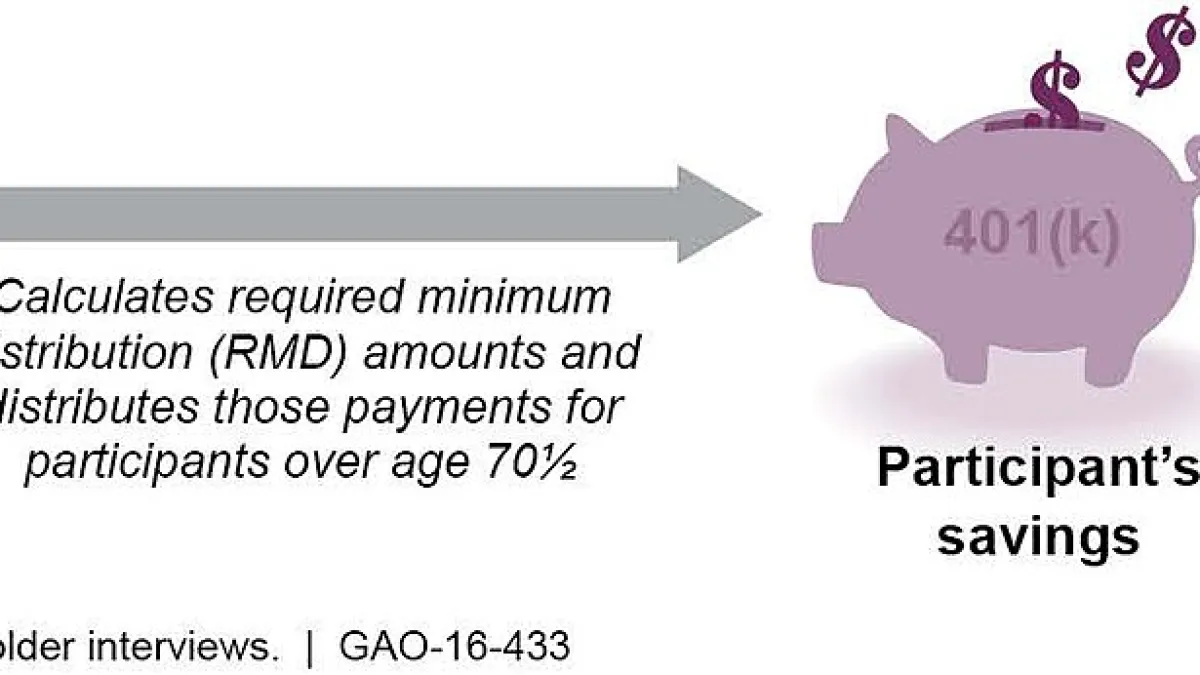
Each year's RMD is generally the account's balance on the previous December 31 divided by a life expectancy factor from IRS tables. You can always take more, the withdrawal is usually taxable income, and missing it can trigger a 25% excise tax on the shortfall.
The IRS says RMD rules apply to all employer-sponsored retirement plans, including profit-sharing plans, 401(k), 403(b) and 457(b) plans, and to traditional IRAs and IRA-based plans such as SEPs, SARSEPs and SIMPLE IRAs.
Roth accounts are different. RMD rules do not apply to Roth IRAs or designated Roth accounts in a 401(k) or 403(b) while the owner is alive. However, beneficiaries of Roth IRAs and designated Roth accounts are subject to RMD rules after the owner's death.
Defined benefit pensions meet the requirement in their own way: the plan generally pays the participant's entire interest as periodic annuity payments over the participant's life, the joint lives of the participant and beneficiary, or a period certain.
Some older 403(b) money has special treatment. Separately tracked pre-1987 contributions, excluding earnings, aren't subject to the age-73 rules and need not be distributed until December 31 of the year the participant turns 75 or, if later, April 1 after the year they retire.
Readers evaluating Required minimum distributions should separate marketing claims from the actual rule text that governs their account or product. When two summaries disagree, the governing document or statute wins. If a rule depends on your age, filing status, or income band, re-check it when any of those facts change. Life events quietly move people across thresholds they last reviewed years earlier.
When RMDs start
The starting age is 73. You must take your first RMD for the year you reach 73, but you can delay that first one until April 1 of the following year, the required beginning date.
Delaying has a catch: your second RMD is still due by December 31 of that same year. The IRS example: if you reached 73 in 2024, your first RMD was due by April 1, 2025, based on the December 31, 2023 balance, and your second by December 31, 2025, based on the December 31, 2024 balance. Taking two in one year can push up your taxable income.
Still working? Participants in a workplace plan, such as a 401(k), can generally delay RMDs from that plan until the year they retire, unless they own 5% of the business sponsoring the plan. This exception doesn't apply to IRAs; traditional, SEP and SIMPLE IRA owners must begin at 73 even if still working.
Employers must keep making plan contributions for employees aged 73 or older who are receiving RMDs and must let them continue salary deferrals where the plan permits.
A useful habit is to write down your goal, time horizon, and cash buffer before you change any election related to Required minimum distributions. Decisions made during a stressful week are the ones people reverse later at a cost. Educational explainers like this one cannot replace personalized advice for complex situations such as divorce orders, inherited accounts, or cross-border tax residency. Escalate those cases to a qualified professional.
How the RMD amount is calculated
Generally, the RMD for each account is the prior December 31 balance divided by a life expectancy factor that the IRS publishes in Publication 590-B. Which table you use depends on your situation.
The Uniform Lifetime Table (Table III) applies if your spouse is not your sole beneficiary or is not more than 10 years younger. The Joint and Last Survivor Table (Table II) applies if your spouse is the sole beneficiary and more than 10 years younger. The Single Life Expectancy Table (Table I) is for beneficiaries of inherited IRAs.
If you have several IRAs, you must calculate the RMD separately for each, but you can withdraw the total from one or more of them. The same aggregation is allowed for multiple 403(b) contracts. RMDs from 401(k) and 457(b) plans, however, must be taken separately from each plan account.
Your IRA custodian or plan administrator may calculate the figure, but the IRS says the account owner is ultimately responsible for taking the correct amount. You can sketch your figures with the calculators at
Keep digital and paper copies of confirmations after every change. Screenshots of election pages, email receipts, and year-end statements make tax season and job changes far less chaotic. Compare fees the same way you would compare two similar listings before you buy: look at what you pay each year, what you get, and whether a simpler option meets the same need.
Taxes, extra withdrawals and penalties
RMDs are taxed at your income tax rate, except any part that is a return of basis, money already taxed, or a qualified Roth distribution, which is tax-free.
You can withdraw more than the minimum, but an excess one year can't be applied to a future year's RMD. RMD amounts also can't be rolled over into another tax-deferred account.
Missing an RMD is expensive. If you fail to withdraw the full amount by the due date, the amount not withdrawn may be subject to a 25% excise tax, reduced to 10% if you correct it in a timely way within two years. You report it on Form 5329 with your federal return for the year the RMD was required.
The penalty may be waived if you show the shortfall was due to reasonable error and you are taking reasonable steps to fix it. To ask, file Form 5329 with a letter of explanation, following the Form 5329 instructions.
If a rule depends on your age, filing status, or income band, re-check it when any of those facts change. Life events quietly move people across thresholds they last reviewed years earlier. Automation helps. Calendar reminders for annual reviews, automatic transfers, and beneficiary checkups reduce the chance that a good plan dies from neglect.
Inherited accounts and next steps
For IRA owners and defined contribution plan participants who die after December 31, 2019, the SECURE Act generally requires the entire balance to be distributed within 10 years. This applies whether death occurs before, on or after the required beginning date.
There are exceptions, so-called eligible designated beneficiaries: a surviving spouse, a child who has not reached the age of majority, a disabled or chronically ill person, or a person not more than 10 years younger than the account owner.
For owners who died before January 1, 2020, before RMDs began, an individual beneficiary generally had to take the full amount within five years of the end of the year after death, or over their own life starting by the end of the year after death.
Next steps: list every account and whether it has RMDs, diarise your 73rd-birthday year and the April 1 and December 31 deadlines, and check your custodian's figures. More US retirement explainers are at and
Found this Required minimum distributions explainer useful? Share it with a friend, tell us what we missed in the comments, and get the FastBuySale app on Google Play () for more guides. Have something to sell? Post a free listing at in a couple of minutes.
Educational explainers like this one cannot replace personalized advice for complex situations such as divorce orders, inherited accounts, or cross-border tax residency. Escalate those cases to a qualified professional. When in doubt about a number that changes every year, describe your plan qualitatively first, then look up the current official figure for the tax year you care about before you act.
💬 Join the discussion on this article →
More in Finance · Trending News · Browse local deals
💡 What's in it for buyers
- List which accounts are subject to RMDs.
- Note your first-year April 1 deadline.
- Check whether you can aggregate IRA RMDs.
- File Form 5329 if you miss one.
- General information, not tax advice.
FAQs
At what age do RMDs start?
Generally at 73.
When is my first RMD due?
For the year you turn 73, but you can delay it until April 1 of the following year.
Do Roth IRAs have RMDs?
Not while the owner is alive, though beneficiaries are subject to RMD rules.
How is an RMD calculated?
Divide the prior December 31 balance by the IRS life expectancy factor from Publication 590-B.
What is the penalty for missing an RMD?
A 25% excise tax on the shortfall, 10% if corrected within two years; it may be waived for reasonable error.
Can I roll over an RMD?
No. RMD amounts can't be rolled into another tax-deferred account.
 $200
 $300
 $3
 $200