


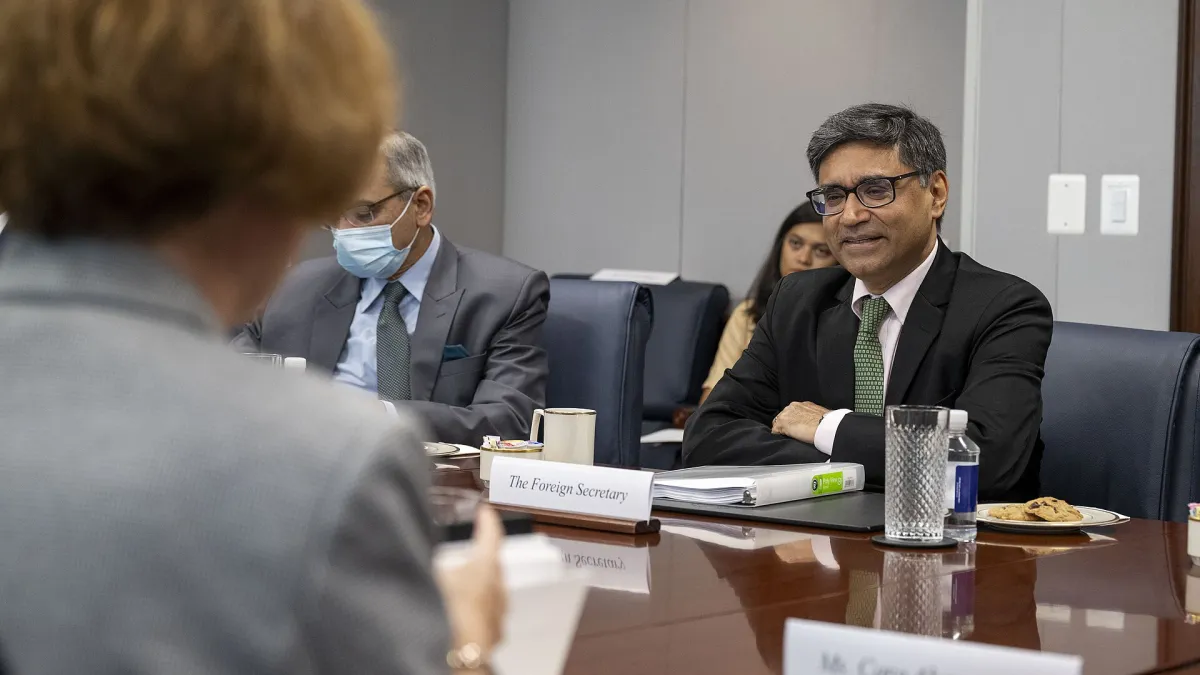
Photo: U.S. Deputy Secretary of Defense Kathleen H. Hicks / Wikimedia Commons, Public domain, cropped
What is vikram misri saying about cricket: What Vikram Misri said about cricket and diplomacy in India
By FastBuySale Newsroom · · 1m ago · EN HI
Get breaking news & deals on your favourite app
Foreign Secretary Vikram Misri discussed how cricket influences international relations. Learn what this means for India's diplomatic strategy and public life. Foreign Secretary Vikram Misri highlighted the unique cultural intersection between international diplomacy and the widespread popularity of cricket across the Indian subcontinent today.
📌 Key points
- Foreign Secretary Vikram Misri highlighted the unique cultural intersection between international diplomacy and the widespread popularity of cricket across the Indian subcontinent today.
- The discussions underscored how sports serve as a soft power tool, potentially easing tensions or fostering goodwill between nations during complex official state engagements.
- For local residents, the remarks reflect how deeply ingrained sports are in the national identity, influencing everything from daily social interactions to professional dialogues.
- Understanding the role of cultural diplomacy helps citizens realize that official government meetings often involve diverse topics beyond just traditional security and trade agreements.
The diplomatic role of cricket in India
Foreign Secretary Vikram Misri recently touched upon the influence of cricket during high-level discussions, signaling a shift in how officials engage with public interests. As citizens wonder what is Vikram Misri saying about cricket, it becomes clear that sport is no longer just a pastime but a significant component of modern statecraft. In India, where the game is a unifying force, its presence in diplomatic talk highlights the importance of shared cultural values.
This approach suggests that officials are increasingly aware of the pulse of the nation. By acknowledging the time spent discussing cricket, the leadership demonstrates a relatable side, bridging the gap between bureaucratic formality and the common person. For many, this recognition validates the sport as a serious pillar of national life, capable of influencing how the country presents itself on the global stage during critical international summits and meetings.
Why sports matter in international relations
Sports diplomacy has long been recognized as a tool for building bridges between countries. When leaders discuss popular games like cricket, it often helps in breaking the ice, creating a more relaxed atmosphere for negotiations. For India, leveraging its passion for the sport can be an effective way to establish rapport with international counterparts. This strategy relies on the universal language of competition and fair play to foster better diplomatic outcomes.
Beyond the field, these discussions emphasize the soft power that India wields. As the popularity of the sport grows globally, the ability to engage through this medium provides a distinct advantage. It allows for a more nuanced approach to international affairs, where personal connections and shared interests can help navigate complex policy challenges. This strategy is increasingly relevant as the nation seeks to expand its influence and strengthen ties with various global partners.
Impact on local life and social connections
For the average Indian, the news that official discussions are influenced by cricket resonates deeply. It confirms that the sport is truly a national obsession that touches every level of society. Whether in local markets or professional settings, cricket frequently dominates conversations. Seeing this reflected in the highest levels of government makes the diplomatic process feel more accessible and grounded in the reality of daily life for millions of people across the country.
This cultural connection also impacts how people view their national representatives. When leaders speak about the sport, it humanizes them, making them appear more in tune with the aspirations and hobbies of the public. It also encourages a sense of pride, as citizens see their favorite game being recognized as a legitimate topic of international significance. This alignment between public passion and government focus can strengthen the bond between the state and its citizens.
What this means for buying and selling
The cultural prominence of cricket significantly influences the marketplace in India. From the high demand for sports equipment to the surge in sales for television sets and streaming subscriptions, the sport drives significant economic activity. Local businesses often capitalize on this by aligning their marketing strategies with major tournament schedules. Buyers looking for gear or home entertainment systems often find the best deals during these peak periods, reflecting the sport's massive economic footprint.
For those participating in local buy and sell platforms, this also means a higher turnover of cricket-related merchandise. Whether it is vintage bats, signed jerseys, or modern training equipment, the secondary market is vibrant. Sellers can leverage the ongoing enthusiasm to find interested buyers quickly, while buyers have a wide array of choices. The intersection of sports and commerce remains a powerful driver of local economic engagement, benefiting both individual traders and larger retail outlets.
Looking ahead at diplomatic trends
As India continues to navigate the global landscape, the integration of cultural elements like cricket into diplomacy will likely continue. This trend suggests a more holistic approach to statecraft, where soft power is utilized alongside traditional hard power. Future engagements will likely see more instances where sports and other cultural touchpoints are used to facilitate dialogue. This evolution reflects the changing nature of international relations in the modern, interconnected world.
For citizens, keeping an eye on these developments provides insight into how the country is positioning itself. It is not just about policy papers and trade deals; it is about how the nation projects its identity. As the global stage becomes more competitive, the ability to connect through shared passions will remain a vital asset. This strategy ensures that India remains a prominent and relatable player, capable of building lasting relationships across diverse global communities.
💬 Join the discussion on this article →
More in Trending · Trending News · Browse local deals
💡 What's in it for buyers
- Check local listings on FastBuySale for deals on cricket gear during major tournaments.
- Look for discounted home entertainment systems to enhance your viewing experience.
- Connect with local sellers to find pre-loved sports equipment at affordable prices.
- Always meet in safe, public locations when finalizing your local transactions.
FAQs
What is Vikram Misri saying about cricket in diplomatic meetings?
Vikram Misri noted that cricket often takes up significant time in discussions, reflecting its status as a major cultural force. This indicates that sports are increasingly used as a tool for soft power and building rapport between nations during official state engagements.
How does cricket influence India's international relations?
Cricket acts as a bridge, helping to break the ice and foster goodwill between countries. By leveraging a shared passion for the sport, officials can create a more relaxed environment, which often aids in navigating complex diplomatic negotiations and strengthening international partnerships.
Does this news affect the price of sports equipment locally?
While the news itself does not change prices, the high cultural interest in cricket drives constant demand. This keeps the market active, meaning buyers can find competitive prices on gear through local platforms, especially when businesses align their sales with major cricket events.
Why is it important for leaders to discuss sports?
Discussing sports humanizes leaders and aligns them with the public's interests. It demonstrates that they are in touch with the nation's cultural heartbeat, which can build trust and make the diplomatic process feel more relatable and grounded for the common citizen.
 KES 25,000
 KES 23,000
 KES 70,000
 KES 14,500